 Spanish
  Italian
  Polish
  English
  Arabic
  Turkish
  Russian
  French
  Chinese
  Deutsch
  GBP
GBP  EUR
EUR 

 Destination Guides

Bangkok Travel Guide: Temples, Street Food and Night Markets
Bangkok hits every sense at once: temple bells under skytrain announcements, incense curling into traffic haze, and the best meal of your life served from a cart for two dollars. Thailand's capital is intense, chaotic and utterly addictive — give it three days and it will give you stories for years.
Why Visit Bangkok?
Bangkok is Southeast Asia's great gateway city and one of its most rewarding. Gleaming temples and royal palaces anchor the old city; mega-malls and rooftop bars define the new; and between them runs the Chao Phraya river, still the city's true main street. Above all, Bangkok is the street-food capital of the world.
Best Time to Visit Bangkok
November to February is the cool season — relatively speaking: 28–32°C with lower humidity and the year's best conditions. March to May is seriously hot. June to October brings monsoon downpours, usually brief and dramatic, with greener parks and lower hotel rates. Bangkok is a year-round city; just carry an umbrella in the wet months.
Top Things to Do in Bangkok
The Grand Palace and Wat Phra Kaew: Thailand's most sacred site — a dazzling complex of golden spires and the Emerald Buddha. Strict dress code: covered shoulders and long trousers or skirts.
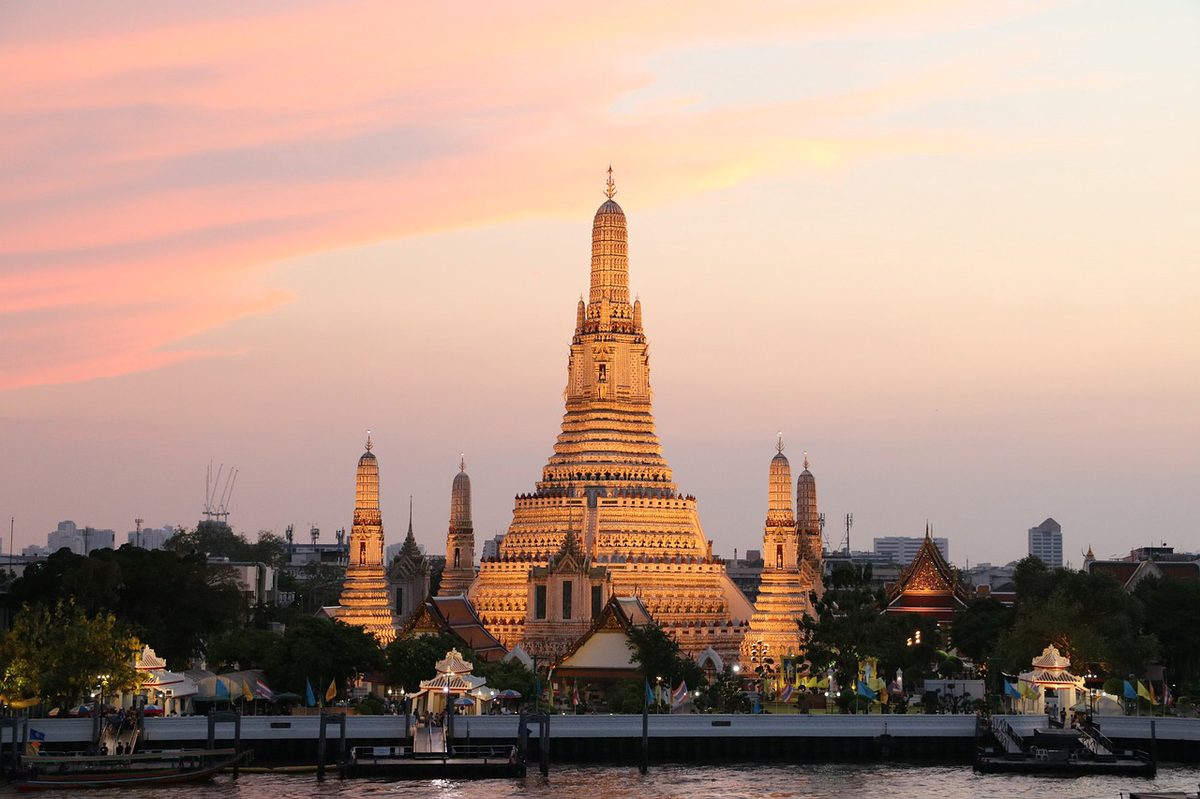
Wat Pho and Wat Arun: Wat Pho's 46-metre Reclining Buddha and Thailand's best traditional massage school; Wat Arun's porcelain-encrusted spires across the river, most beautiful at sunset from a riverside bar or the temple itself at opening time.
Street food pilgrimage: Yaowarat (Chinatown) after dark is an open-air feast — seafood stalls, mango sticky rice, boat noodles. Michelin now stars several Bangkok street vendors; queues are part of the fun.
Markets: Chatuchak Weekend Market's 15,000 stalls sell everything; the train night markets mix vintage finds with food courts; floating markets (Khlong Lat Mayom is the local favourite) work best early.
River and khlongs: Ride the Chao Phraya Express Boat like a local, then charter a longtail through Thonburi's canals for a glimpse of stilt-house Bangkok.
Rooftop sundowners: Bangkok invented the sky bar. One sunset cocktail above the city — dress codes apply — is an essential ritual.
Where to Stay in Bangkok
Sukhumvit is the convenient expat heartland with BTS access. Riverside hotels offer resort calm with boat shuttles to the temples. Silom and Sathorn suit business-style hotels near nightlife; the old city (Rattanakosin) puts the Grand Palace on your doorstep. Budget travellers still love the Khao San area's guesthouses.
Getting Around
The BTS Skytrain and MRT subway beat the traffic; the Chao Phraya Express Boat is both transport and sightseeing. Tuk-tuks are fun once — agree the price first and ignore any "the temple is closed today" detours. Grab (ride-hailing) is reliable and cheap.
Practical Tips for 2026
Most nationalities receive a 60-day visa exemption on arrival. Temples require modest dress — carry a light sarong. Drink bottled water, eat where locals queue, and don't fear the street food — turnover is its own hygiene. Bargain with a smile at markets; mall prices are fixed. Carry small notes for boats, stalls and taxis.
The Bottom Line
Bangkok rewards the traveller who surrenders to it: follow your nose down a side street, take the boat instead of the taxi, and let the city set the pace. Find flights to Bangkok on Skyvela and dive in.