 Spanish
  Italian
  Polish
  English
  Arabic
  Turkish
  Russian
  French
  Chinese
  Deutsch
  GBP
GBP  EUR
EUR 

 Destination Guides

Cancún and the Riviera Maya Travel Guide: Beaches, Cenotes and Mayan Ruins
Mexico's Caribbean coast offers a rare triple threat: some of the world's best beaches, the planet's largest concentration of swimmable cenotes, and the great Mayan cities of Chichén Itzá and Tulum. From Cancún's resort strip to Tulum's boho beach shacks, the Riviera Maya has a version of paradise for every budget.
Why Visit Cancún and the Riviera Maya?
The water colour here has to be seen to be believed — gradients of turquoise over powder-white coral sand. Beneath the jungle, thousands of limestone cenotes (natural sinkholes) hide crystal-clear freshwater pools sacred to the Maya. Add world-class snorkelling on the Mesoamerican Reef, Mayan ruins on cliffs above the sea, and a food scene from taco stands to tasting menus.
Best Time to Visit
December to April is the dry season — sunshine, low humidity and calm seas, with peak prices over Christmas and Easter. May and June are hot with thin crowds. July to October brings heat, humidity and hurricane season (September–October is the risk window), plus sargassum seaweed that varies by beach and year — check current reports before booking a beach-focused trip. Whale shark season runs June to September.
Top Things to Do
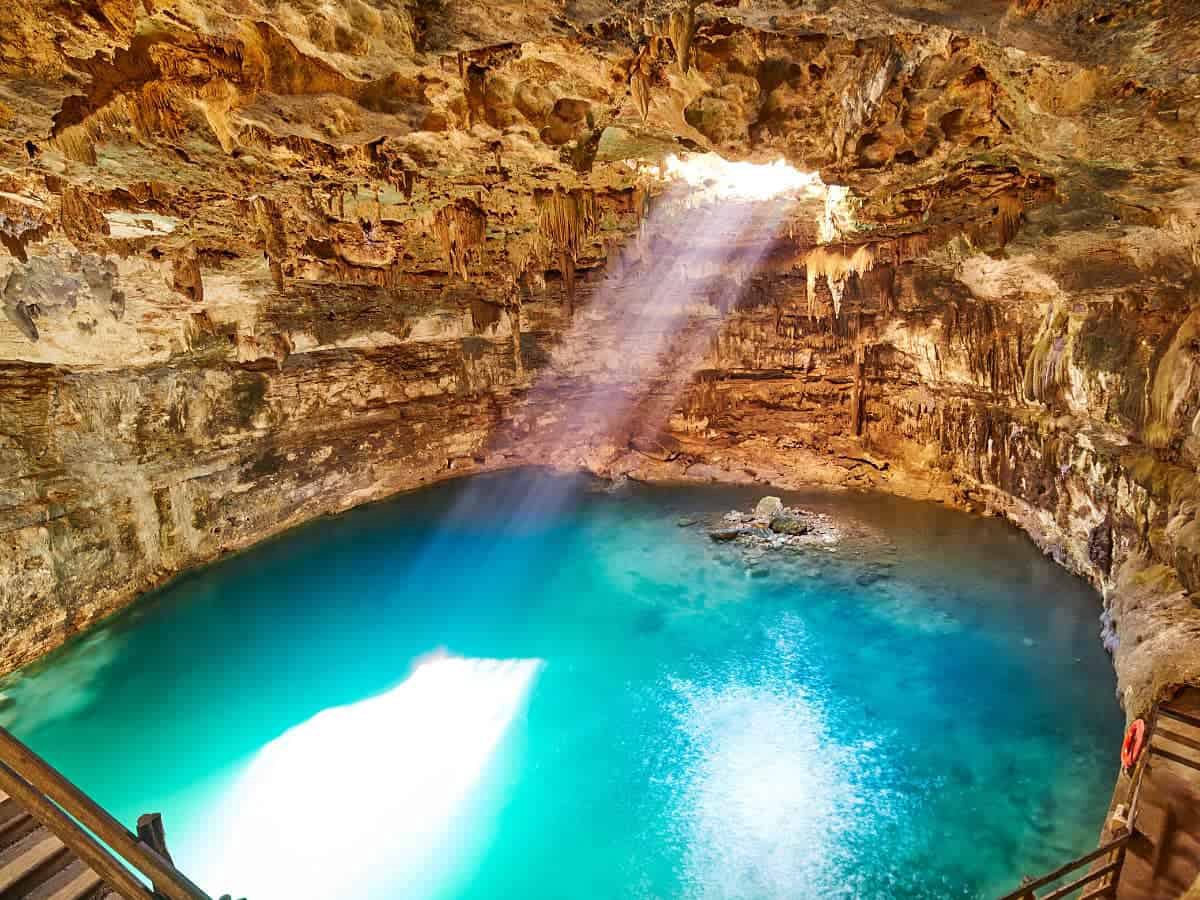
Cenotes: The peninsula's signature experience. Gran Cenote and Dos Ojos near Tulum for snorkelling through caves; Ik Kil's vine-draped depths near Chichén Itzá; Suytun's photogenic platform. Entrance fees run $10–25 USD.
Tulum: The only Mayan city built on the sea — El Castillo temple above a perfect beach. Arrive at the 8am opening to beat the heat and crowds, then descend to the sand. The beach road south offers bohemian eco-hotels and jungle gyms.
Chichén Itzá: One of the New Seven Wonders — the great pyramid of Kukulcán, the ball court, the sacred cenote. Two hours inland; combine with Valladolid's colonial charm and a cenote swim. Go early or late; midday is furnace-hot.
Cobá and the jungle: Climb-free these days but atmospheric — pyramid ruins rising from jungle, best explored by rental bike along shaded sacbé roads.
Reef and islands: Snorkel with turtles at Akumal, dive the MUSA underwater museum, or ferry to Isla Mujeres (Playa Norte is one of Mexico's finest beaches) or laid-back Holbox for whale sharks in season.
Where to Stay
Cancún's Hotel Zone delivers classic all-inclusive resort life with guaranteed beach quality. Playa del Carmen balances walkable town life (Quinta Avenida's dining and nightlife) with beach clubs. Tulum is the stylish choice — jungle hotels, yoga, and restaurants at international prices. Akumal and Puerto Morelos offer quiet, turtle-rich alternatives.
Getting Around
ADO buses connect Cancún, Playa, Tulum and Valladolid comfortably and cheaply. Colectivos (shared vans) run the highway for pennies. Rental cars make cenote-hopping easy — drive cautiously, keep tank topped up, and avoid night driving. Airport transfers: pre-booked shuttles beat taxi negotiation.
Practical Tips for 2026
Most Western visitors receive a 180-day tourist permit on arrival. Sargassum seaweed is the region's wild card — hotels rake daily, but check recent photos of your specific beach. Use reef-safe, biodegradable sunscreen (required in cenotes — shower before swimming). Drink bottled water. Pesos get better prices than dollars; ATMs dispense both. Book Chichén Itzá and Xcaret parks online for discounts.
The Bottom Line
Beach mornings, cenote afternoons, ruins at dawn — the Riviera Maya stacks bucket-list moments like nowhere else. Find flights to Cancún on Skyvela and start counting shades of blue.