 Spanish
  Italian
  Polish
  English
  Arabic
  Turkish
  Russian
  French
  Chinese
  Deutsch
  GBP
GBP  EUR
EUR 

 Destination Guides

Kyoto Travel Guide: Temples, Geisha Districts and Zen Gardens
For a thousand years Kyoto was Japan's capital, and it never stopped acting like it. Seventeen UNESCO World Heritage sites, 1,600 temples, geisha gliding through lantern-lit lanes, and gardens raked into philosophy — Kyoto is where travellers come to meet the Japan of their imagination, and it does not disappoint.
Why Visit Kyoto?
If Tokyo is Japan's future, Kyoto is its soul. This is the city of tea ceremony and kaiseki cuisine, of Zen rock gardens and thousand-year-old shrines, of festivals that have run for twelve centuries. Compact, walkable and endlessly photogenic, Kyoto is the essential second city of any Japan itinerary.
Best Time to Visit Kyoto
Cherry blossom season (late March to early April) and autumn foliage (mid to late November) are Kyoto at its most beautiful — and most crowded; book hotels months ahead. Early summer is lush and quieter; the July Gion Matsuri is Japan's greatest festival. Winter is cold but peaceful, with snow-dusted temple roofs and the year's best prices.
Top Things to Do in Kyoto
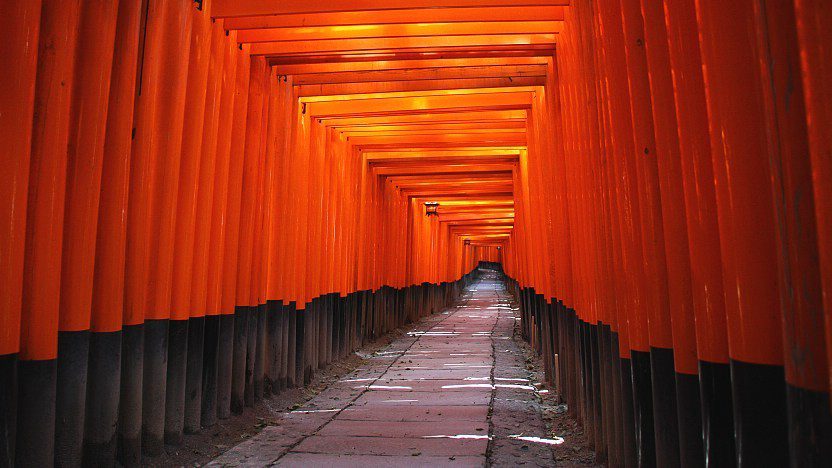
Fushimi Inari Shrine: Ten thousand vermilion torii gates tunnel up the mountainside. Hike the full loop (two to three hours) for solitude and city views — go at sunrise or after 4pm to escape the crowds.
Arashiyama: The bamboo grove at dawn is otherworldly; pair it with Tenryū-ji temple's garden, the riverbank monkeys at Iwatayama, and a stroll across the Togetsukyō Bridge. The Sagano scenic railway is a foliage-season classic.
Kinkaku-ji and Ryōan-ji: The Golden Pavilion floating over its mirror pond, then Japan's most famous Zen rock garden — the perfect yin-yang temple pairing on the city's northwest edge.
Gion and Higashiyama: At dusk, geiko and maiko hurry between engagements on Hanamikoji Street — watch respectfully, photograph only from a distance. The preserved lanes of Ninenzaka and Sannenzaka below Kiyomizu-dera are Kyoto's most atmospheric walk, best early morning.
Kiyomizu-dera: The vast wooden terrace jutting over the hillside, built without a single nail. Sunrise here, over the city, is a core travel memory.
Nishiki Market and kaiseki: Graze "Kyoto's kitchen" — tofu skin, pickles, tamagoyaki — then splurge once on a multi-course kaiseki dinner, the pinnacle of Japanese cuisine.
Where to Stay in Kyoto
Downtown Kawaramachi balances transport, dining and nightlife. Gion and Higashiyama offer machiya townhouse stays amid the old streets. Kyoto Station area suits rail-hoppers doing day trips (Nara, Osaka, Himeji). Splurge on one night in a ryokan with tatami, futons and a multi-course dinner.
Getting Around
City buses reach most temples — buy a day pass or use an IC card (Suica/ICOCA). The subway covers north-south hops; trains serve Arashiyama and Fushimi Inari. Kyoto rewards bicycles: flat, compact and full of quiet back lanes. From Osaka's Kansai Airport, the Haruka express reaches Kyoto Station in 75 minutes.
Practical Tips for 2026
Kyoto introduced an accommodation tax and promotes "enjoy my Kyoto" etiquette: don't photograph private property or geisha up close, never enter restricted lanes, and carry your rubbish. Book popular restaurants (especially kaiseki and anything Michelin) weeks ahead. Temples typically open 8–9am and close by 5pm — plan early starts. Cash remains king at smaller shrines and eateries.
The Bottom Line
Kyoto rewards the slow traveller: one temple at dawn, one garden at noon, one long dinner. Rush it and you'll see everything and feel nothing. Find flights to Osaka (Kansai) on Skyvela and give Kyoto the days it deserves.