 Spanish
  Italian
  Polish
  English
  Arabic
  Turkish
  Russian
  French
  Chinese
  Deutsch
  GBP
GBP  EUR
EUR 

 Destination Guides

Marrakech Travel Guide: Souks, Riads and the Magic of the Medina
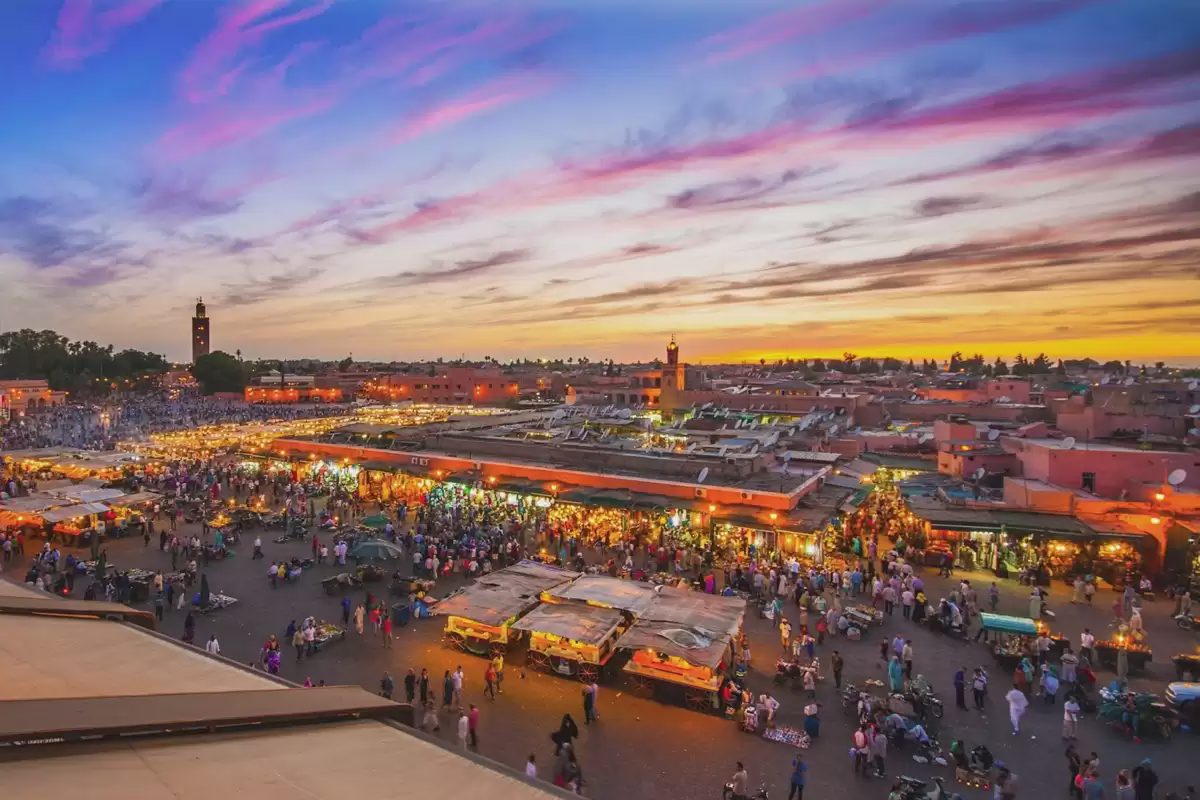
Marrakech announces itself in waves: the drumbeat of Jemaa el-Fnaa, the scent of cumin and orange blossom, the pink walls that gave the "Red City" its name. Inside the medieval medina, a thousand years of craft tradition continues in souks lit by pierced-metal lanterns. It's Africa's most intoxicating city break — three hours from Europe, a world away.
Why Visit Marrakech?
Few cities so close to Europe feel so completely elsewhere. Marrakech delivers sensory immersion — labyrinthine souks, courtyard riads, rooftop dinners under the Atlas Mountains — plus gateway access to the Sahara, Berber villages and Atlantic beaches. And the value is exceptional: fine riads and feasts at a fraction of European prices.
Best Time to Visit Marrakech
March to May and October to November bring warm days, cool evenings and blooming gardens — the ideal windows. Winter days are sunny (18–20°C) with cold nights. June to September regularly exceeds 38°C; if you go, do as locals do: siesta through the afternoon and live after dark.
Top Things to Do in Marrakech
Jemaa el-Fnaa: The great square transforms at dusk into an open-air theatre — storytellers, musicians, grill smoke and a hundred food stalls. Watch it all from a rooftop café with mint tea, then dive in.
The souks: North of the square, alleyways specialise by craft: metalworkers, leather tanners, spice pyramids, carpets. Getting lost is the point; a polite "la, shukran" (no, thank you) navigates the salesmanship. Bargaining is expected — start around a third of the opening price.
Jardin Majorelle and Yves Saint Laurent Museum: The cobalt-blue villa and cactus gardens restored by YSL. Book timed tickets online — it's the city's most visited site.
Palaces and madrasas: Bahia Palace's painted ceilings, the Saadian Tombs' gilded chambers, and Ben Youssef Madrasa's breathtaking courtyard of carved cedar and zellige tile.
Hammam and cooking class: Scrub down at a local hammam, then learn to cook tagine and bake msemen with a Moroccan chef — the tastiest souvenir there is.
Day trips: The Atlas Mountains (Imlil and waterfalls), the Agafay Desert for sunset camel rides and dinner camps, or coastal Essaouira's ramparts and seafood.
Where to Stay in Marrakech
Stay in a riad — a traditional courtyard house turned boutique hotel, hidden behind unmarked medina doors. The medina puts the souks at your door; the Kasbah and Mouassine quarters are slightly calmer. Hivernage and Guéliz (the new town) suit travellers wanting pools and international hotels.
Getting Around
The medina is walking-only — and disorienting. Download offline maps, learn your riad's nearest landmark, and expect locals offering "directions" to expect a tip (a firm, friendly no works). Petit taxis are metered and cheap for new-town hops; agree fares to the airport in advance (around 100–150 MAD).
Practical Tips for 2026
Most Western nationalities enter visa-free for 90 days. Dress modestly — shoulders and knees covered keeps attention low. Friday is prayer day; many souk stalls close until afternoon. Drink bottled water; eat where turnover is high (Jemaa el-Fnaa stalls are generally fine — choose busy ones). Carry small dirham notes for tips, taxis and souks. Photography: always ask before photographing people.
The Bottom Line
Marrakech is theatre you can sleep inside. Book a medina riad, surrender to the souk, and save a day for the Atlas foothills. Find flights to Marrakech on Skyvela and let the Red City work its magic.