 Spanish
  Italian
  Polish
  English
  Arabic
  Turkish
  Russian
  French
  Chinese
  Deutsch
  GBP
GBP  EUR
EUR 

 Travel Tips

How to Find Cheap Flights in 2026: 12 Proven Tricks Airlines Don't Advertise
Airfare pricing in 2026 is driven by algorithms that adjust fares dozens of times a day — but the system has patterns, and once you know them you can consistently pay less than the person sitting next to you. Here are the twelve tactics our travel team uses every single week.
1. Search with flexible dates first
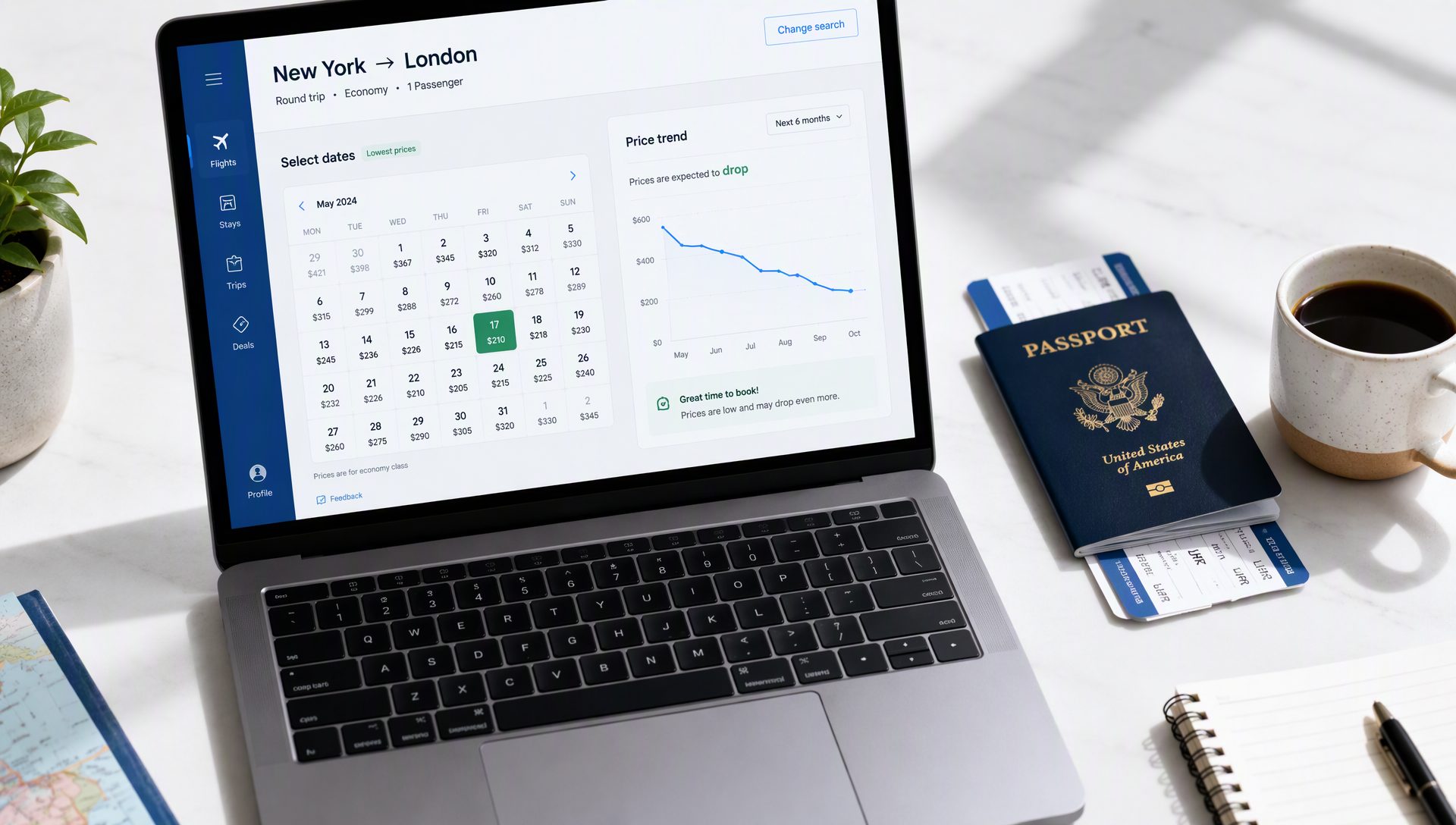
A Tuesday-to-Tuesday trip is often 20–40% cheaper than Friday-to-Sunday on the same route. Always start with a whole-month or ±3-days view before you commit to dates — the calendar does the bargaining for you.
2. Set price alerts instead of refreshing
Fares move fastest 3–6 months before departure. Set an alert once, and book when the fare drops into your target range instead of stress-refreshing every evening.
3. Check nearby airports
Flying into Bergamo instead of Milan, or out of Stansted instead of Heathrow, can cut the fare in half. Always tick the 'include nearby airports' option — the 30-minute transfer usually pays for dinner.
4. Book 6–8 weeks ahead for short-haul, 3–5 months for long-haul
The 'sweet spot' is real: short European hops are usually cheapest 6–8 weeks out, while intercontinental fares bottom out 3–5 months before departure. Last-minute deals still exist, but only on routes with weak demand.
5. Fly the unpopular hours
The 6:05 a.m. departure and the 22:40 return are cheap for a reason — most travellers refuse them. If you can survive one early alarm, you'll often save £40–£90 per person.
6. Compare one-way combinations
Two one-way tickets on different airlines frequently beat a return on one carrier. Modern search engines mix airlines automatically — use that.
7. Understand the real cost of 'basic' fares
A £29 fare with a £45 cabin bag fee is a £74 fare. Compare the total trip price — bag, seat, payment fee — not the headline number.
8. Use points and companion vouchers strategically
One well-timed credit-card bonus can cover a European return. Spend them on expensive peak dates, pay cash when fares are low.
9. Avoid school holidays by one week
Shifting your trip just seven days outside the holiday window routinely saves 30%+. Shoulder season also means shorter queues and better hotel rates.
10. Clear nothing — prices don't rise because of cookies
The 'incognito myth' is mostly a myth. What actually moves prices is demand and seat inventory. Spend your energy on flexibility, not browser tricks.
11. Book mistake fares fast, think later
When a pricing glitch appears, book first — airlines honour most mistake fares, and you usually have 24 hours to cancel free of charge.
12. Compare on Skyvela before you pay
Our search scans multiple suppliers in real time and shows the final price upfront — no bait fares, no surprise fees at the last click.
The Bottom Line
Cheap flights aren't luck — they're a method. Be flexible with dates and airports, book inside the fare sweet spot, and always compare the full price. Do that, and 2026 will be your cheapest year of travel yet.